
What peptides are
Peptides are short chains of amino acids, the same building blocks as proteins but far smaller. The body uses them as signals: growth hormone releasing hormone, insulin, oxytocin and hundreds of others are peptides. Because they are signals rather than fuel or structure, small amounts can change how tissues behave.
The research peptides we supply are synthetic copies or modified versions of those signals. Some are approved medicines elsewhere in the world. Many are not, and are studied only in animals or in small early-phase human trials. We think the difference matters, which is why every compound on this site carries a grade.
How to read the research
Our range spans three kinds of compound, and the difference is worth understanding before you choose. Every product page lists the studies behind that compound, with links, so you can read the source rather than take our word for it.
Approved medicines
Registered somewhere in the world and tested in large randomised trials, so the outcome in people is measured rather than inferred.
Tirzepatide, tesamorelin, bremelanotide, thymosin alpha-1
In human trials
Studied in people, but in trials that are small, early-phase or published mainly outside the English-language literature.
Retatrutide, NAD+, GHK-Cu, CJC-1295, ipamorelin, semax, selank
Emerging research
Strong mechanisms and extensive animal work, with human outcome data still to come. Widely used in the research community.
BPC-157, TB-500, MOTS-c, KPV, epithalon, 5-Amino-1MQ
Regulatory note: apart from the approved medicines named above, none of these compounds are registered medicines in South Africa, and they are supplied for research and educational purposes only. Read the studies, note the cautions on each product page, and work with an independent, qualified healthcare professional.
Every compound we supply
Each product page carries the mechanism, key studies with links, cautions and timeline.
- TirzepatideDual GIP / GLP-1 receptor agonist
- RetatrutideTriple GIP / GLP-1 / glucagon receptor agonist
- TesamorelinGHRH analogue
- AOD-9604Growth hormone fragment 176-191
- 5-Amino-1MQNNMT inhibitor (small molecule)
- MOTS-cMitochondrial-derived peptide
- NAD+Coenzyme
- BPC-157Gastric pentadecapeptide
- TB-500Thymosin beta-4 (17-23) fragment
- GHK-CuCopper-binding tripeptide
- CJC-1295 (no DAC)GHRH analogue, short-acting
- CJC-1295 with DACGHRH analogue, long-acting
- IpamorelinSelective growth hormone secretagogue (ghrelin mimetic)
- EpithalonSynthetic tetrapeptide (pineal)
- GlutathioneTripeptide antioxidant
- DSIPNeuropeptide
- SemaxACTH(4-10) analogue (nootropic peptide)
- SelankTuftsin analogue (anxiolytic peptide)
- PT-141Melanocortin-4 receptor agonist
- KisspeptinHypothalamic signalling peptide
- Melanotan ILinear alpha-MSH analogue
- Melanotan IICyclic alpha-MSH analogue (non-selective)
- Thymosin Alpha-1Thymic peptide (immune modulator)
- KPVAlpha-MSH C-terminal tripeptide
Preparation and storage
Peptides ship as a freeze-dried powder that has to be reconstituted before use. Every vial arrives with enough bacteriostatic water to do that, included in the price, so you only need a syringe and swabs. Unopened vials keep for months refrigerated; once mixed, they are used within weeks. Keep everything sterile and never freeze a mixed vial.
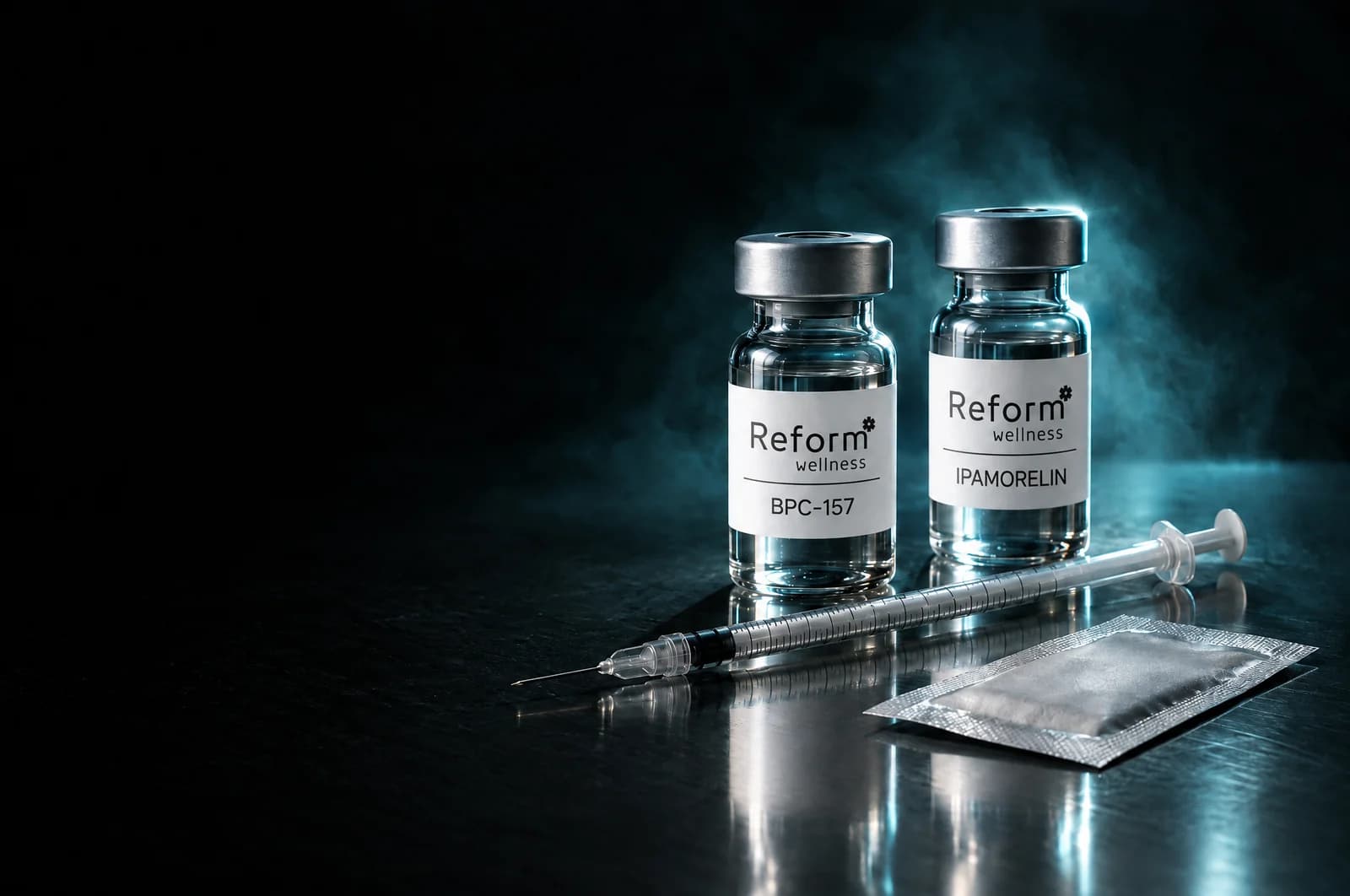
- 01Swab the stoppersWipe the peptide vial and the bacteriostatic water vial with an alcohol swab and let them dry.
- 02Draw the waterUse the reconstitution syringe to draw the volume of the included bacteriostatic water your protocol calls for.
- 03Add it slowlyAngle the needle so the water runs down the inside wall of the vial. Never spray it onto the powder.
- 04Swirl, don't shakeRoll the vial gently until the solution is clear. Shaking can damage the peptide.
- 05RefrigerateKeep reconstituted vials at 2 to 8 °C, out of light, and note the date on the vial.
Baseline testing
In peptide research, laboratory markers are how physiological pathways are tracked. A blood panel before starting and a follow-up after an appropriate period turns a protocol into something you can measure and refine rather than guess at.
Commonly referenced markers include hormonal balance (including reproductive hormones), metabolic health and blood-sugar regulation, lipid profile and cardiovascular risk, and iron and nutrient status. Growth-hormone-axis protocols usually add IGF-1; incretin protocols add fasting glucose and HbA1c.
Testing is guided on an individual basis. We encourage you to interpret results with an independent, qualified healthcare professional.
How we categorise peptides
Peptides are grouped according to the biological pathways and systems they are studied alongside. The categories are educational and reflect common frameworks in the scientific literature.
- Metabolic SupportAppetite control, fat loss and blood sugar regulation.
- Recovery & RepairTendons, ligaments, joints, gut lining and lean tissue.
- Cellular & Longevity SupportMitochondrial energy, cellular resilience and healthy ageing.
- Performance & VitalityHormonal signalling, libido and everyday drive.
- Sleep & Overnight RecoverySleep depth, circadian rhythm and nervous-system balance.